
What Your Body Craves More Than Protein or Vitamin D: The Hidden Mineral That Powers Your Energy, Sleep, and Mood
Protein, vitamin D, and creatine may dominate the wellness charts, but there’s a rising star you might be missing. This underrated nutrient is quietly stealing the spotlight—and for good reason. In this post, we’ll explore what it is, why it matters, and why it deserves a permanent spot on your nutritional playlist. Spoiler alert: it’s magnesium. And there's more to it than you may think!
In 2024, supplement sales for this overlooked nutrient surged more than 40% in the U.S. Honestly, it’s about time. Roughly three out of four adults fall short, largely because the standard North American diet is woefully light on plants. Surprised? You shouldn’t be. With convenience foods dominating and influencers hyping trends like the ‘carnivore’ diet, the real shock is that Americans manage even the bare minimum: just one serving of fruit and a mere 1.5 servings of vegetables per day.
Magnesium deficiency or insufficiency can be behind some pretty nasty symptoms like fatigue, irritability, and metabolic issues. Downstream, low intake of magnesium can contribute to a higher risk of heart attacks, strokes, cardiac arrhythmias, heart disease, and other cardiovascular problems. People with low magnesium can also more easily develop diabetes, osteoporosis, migraines, depression, anxiety, cognitive decline, and dementia.
Magnesium helps with many processes in the body, from cardiovascular health to cognitive function and even injury prevention. Its impact is so profound that experts believe the magnesium-rich water of Costa Rica’s Nicoya Peninsula contributes to its status as a Blue Zone, one of the rare regions where people regularly live past 100.
Disclosure: This blog post contains affiliate links. By clicking on the affiliate links in this post, not only do you get to find great products at no extra cost, but you also support my blog, as I may receive a small commission for purchases made through these links.
Where to Find Magnesium
Ideally, we’d get all the magnesium we need from food—and that should always be the primary goal. You can give your intake a boost by leaning on these magnesium-rich foods, although the reality is that consistently hitting optimal levels through diet alone can be tough.
Leafy Greens
Especially: Spinach, Swiss chard, kale, collards, mustard greens, chicory
1 cup cooked spinach provides ~157 mg magnesium (37% DV).
Nuts, Pseudo-Nuts & Seeds
These nuts are highest: Almonds, cashews, peanuts, Brazil nuts
These seeds are highest: Pumpkin seeds, sunflower seeds, chia seeds, flaxseeds
1 oz dry-roasted almonds = ~80 mg magnesium (19% DV).
Legumes
Especially: Black beans, kidney beans, chickpeas, lentils, edamame
1 cup black beans = ~120 mg magnesium.
Whole Grains & Pseudo-Grains
Especially: Brown rice, quinoa, oats, whole wheat, sorghum
1 cup cooked quinoa = ~118 mg magnesium.
Fruits
Especially: Bananas, avocados, figs, blackberries, guava
1 medium banana = ~32 mg magnesium.
1 avocado = ~58 mg magnesium.
Other Sources
Dark chocolate (1 oz = ~65 mg magnesium)
Fatty fish (salmon, mackerel, halibut)
Tofu and yogurt
How Much Magnesium?
The daily recommended intake of magnesium is, well, it depends. There are several factors to consider: your goals, the form of magnesium taken, and how much magnesium you are already getting.
In the United States, the Food & Drug Administration recommends that adults get between 310 and 400 mg of magnesium a day to prevent deficiency. Many people, including functional practitioners and biohackers, believe That because of soil depletions, stess, and processed diets, most people should aim for a higher number. Not only should adults meet the recommended number to prevent deficiency, but magnesium intake should also fall within an “optimal” range, where the body works best. Generally, that community aims for 400-600 mg per day, sometimes higher for athletes, or those with insulin resistance, sleep, or mood issues.
Something else to consider is how well your body tolerates magnesium supplementation. For example, taking too much magnesium (or ramping up intake too soon) can cause diarrhea or loose stools. Not fun! Better to titrate up if you are not currently supplementing.
What Kind—There Are So Many!
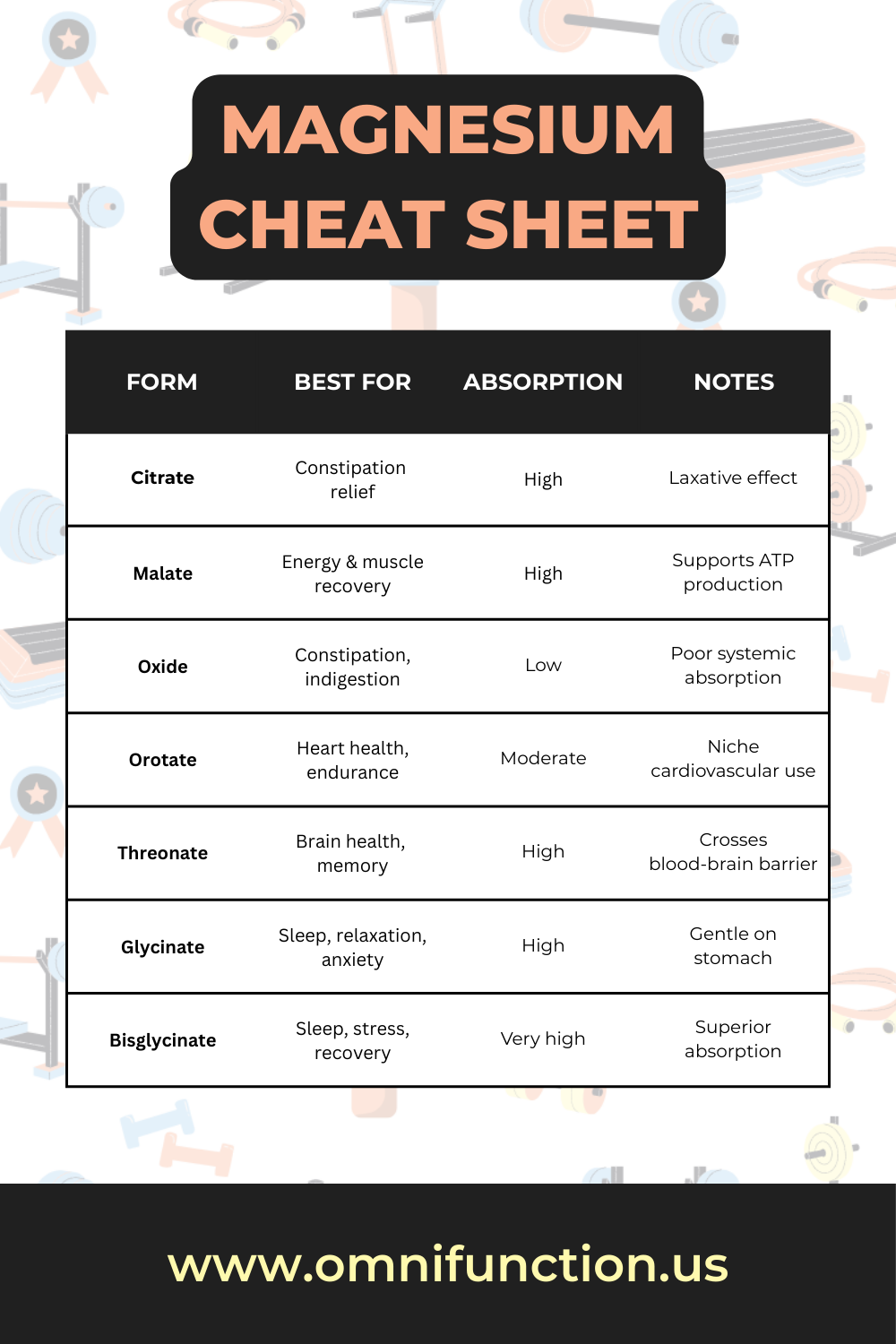
Magnesium can be bound to organic compounds, such as minerals or amino acids, to facilitate absorption across the blood-brain barrier. Below are some of the most common forms of magnesium available to consumers in the U.S. and Canada. You’ll also see the main effects listed, although this is a bit reductionist since each form of magnesium has benefits that cross over to some of the other forms’ specialties. Some brands offer combinations of different types.
Magnesium Citrate
What it is: Magnesium bound to citric acid. Often paired with other forms of magnesium, such as magnesium malate.
Best for: Relieving mild constipation and supporting digestion.
Notes: Highly bioavailable, but its laxative effect can be too strong for some people if taken in higher doses.
Recommended: Thorne Magnesium CitraMate, Pure Encapsulations Magnesium Citrate, Pure Encapsulations Magnesium Citrate/Malate, Pure Encapsulations Magnesium Citrate Liquid
Magnesium Malate
What it is: Magnesium bound to malic acid (a compound involved in energy production).
Best for: Muscle recovery, energy metabolism, and reducing fatigue.
Notes: Often recommended for people with fibromyalgia or chronic fatigue because malic acid supports ATP (cellular energy) production.
Recommended: Thorne Magnesium CitraMate, Pure Encapsulations Magnesium Citrate/Malate, Designs for Health Magnesium Malate
Magnesium Oxide
What it is: Magnesium bound to oxygen.
Best for: Occasional constipation, indigestion, or heartburn relief.
Notes: Has a high magnesium content by weight but poor absorption in the body. More useful for digestive relief than for correcting a deficiency.
Recommended: Douglas Laboratories Magnesium Oxide
Magnesium Orotate
What it is: Magnesium bound to orotic acid.
Best for: Supporting heart health and cellular energy.
Notes: Sometimes used in clinical settings for cardiovascular conditions. More niche, but may help with endurance and recovery.
Recommended: Solaray Magnesium Asporotate Complex
Magnesium Threonate
What it is: Magnesium bound to threonic acid (a metabolite of vitamin C).
Best for: Brain health, memory, and cognitive support.
Notes: Unique because it can cross the blood-brain barrier. Promising for learning, neuroprotection, and possibly age-related cognitive decline.
Recommended: Designs for Health Magnesium L-Threonate
Magnesium Glycinate
What it is: Magnesium bound to one glycine molecule (an amino acid with calming properties).
Best for: Relaxation, sleep support, anxiety reduction, and muscle recovery.
Notes: Gentle on the stomach, well absorbed, and less likely to cause laxative effects.
Recommended: Thorne Magnesium Glycinate, Pure Encapsulations Magnesium Glycinate, Designs for Health Magnesium Glycinate Complex
Magnesium Bisglycinate
What it is: Magnesium bound to two glycine molecules (which offers better absorption than just one molecule).
Best for: Same benefits as glycinate (calm, sleep, stress relief), but with enhanced absorption.
Notes: Often marketed as “highly bioavailable” magnesium. Excellent choice for long-term supplementation when deficiency is a concern.
Recommended: Thorne Magnesium Bisglycinate, Thorne Magnesium Bisglycinate Travel Packs, Designs for Health Magnesium Glycinate Complex
Quality Matters
If you are thinking about supplementing with magnesium, be sure to use products from a high-quality brand, since the supplement industry in the U.S. is unregulated. There are independent organizations whose job it is to inspect and certify supplements. Some are more reputable than others. Start by looking for the GMP (Good Manufacturing Practices) stamp, and be sure to do a quick internet search to see what people are saying.
Generally, my go-to brands are Thorne, Designs for Health, Pure Encapsulations, Douglas Laboratories, and Solaray. These brands always follow GMP standards, have great reputations, are most likely to be recommended by functional medicine practitioners, and generally use gel capsules instead of pressed tablets (for easier digestibility).
Delivery Method
The delivery method is just as important as the form of magnesium, because the way you get it can either contribute to or detract from staying consistent. Since magnesium needs to build up over time, this is really important. What works for your routine?
Capsules: Harder to get a big dose.
Gummies: harder to get these to taste good.
Stick packs: Easier to flavor.
Liposomal: Bound to fats to offer higher absorption and gentler digestion. Pure Encapsulations UltraMag Magnesium is a high-quality example of fat-bound magnesium.
Oils and Sprays: The skin absorbs about 60% of what you put on it, which makes a spray or oil a calming part of an anti-stress or evening routine.
Recap
OK, so we’ve gotten through a pretty intense crash course on magnesium. Let’s review a few key points.
Various forms & functions:
Citrate & Oxide → digestion-focused.
Malate & Orotate → energy and heart health.
Threonate → brain and cognition.
Glycinate & Bisglycinate → relaxation, sleep, and stress resilience.
Delivery methods:
Capsules and tablets: see the list above
Drinks: Ritual is a fantastic way to wind down
Gummies: Mary Ruth’s Magnesium Gummies are naturally sweetened and sugar free
Oils and sprays: NOW Magnesium Topical Spray
Quality
Don’t fall for marketing—invest in good things for your body.
Multipurpose Use
It is important to know that you can also use one form of magnesium for multiple purposes, even if it isn’t the most efficient or effective form.
Want to know more about nutrition and fitness? Sign up for my not-super-frequent newsletter to stay informed! See the field below.
Disclaimer: This blog post is for informational purposes only and should not be considered medical advice. Always consult with a healthcare professional before starting any new supplement or making changes to your healthcare routine.